The Forest after the Rain
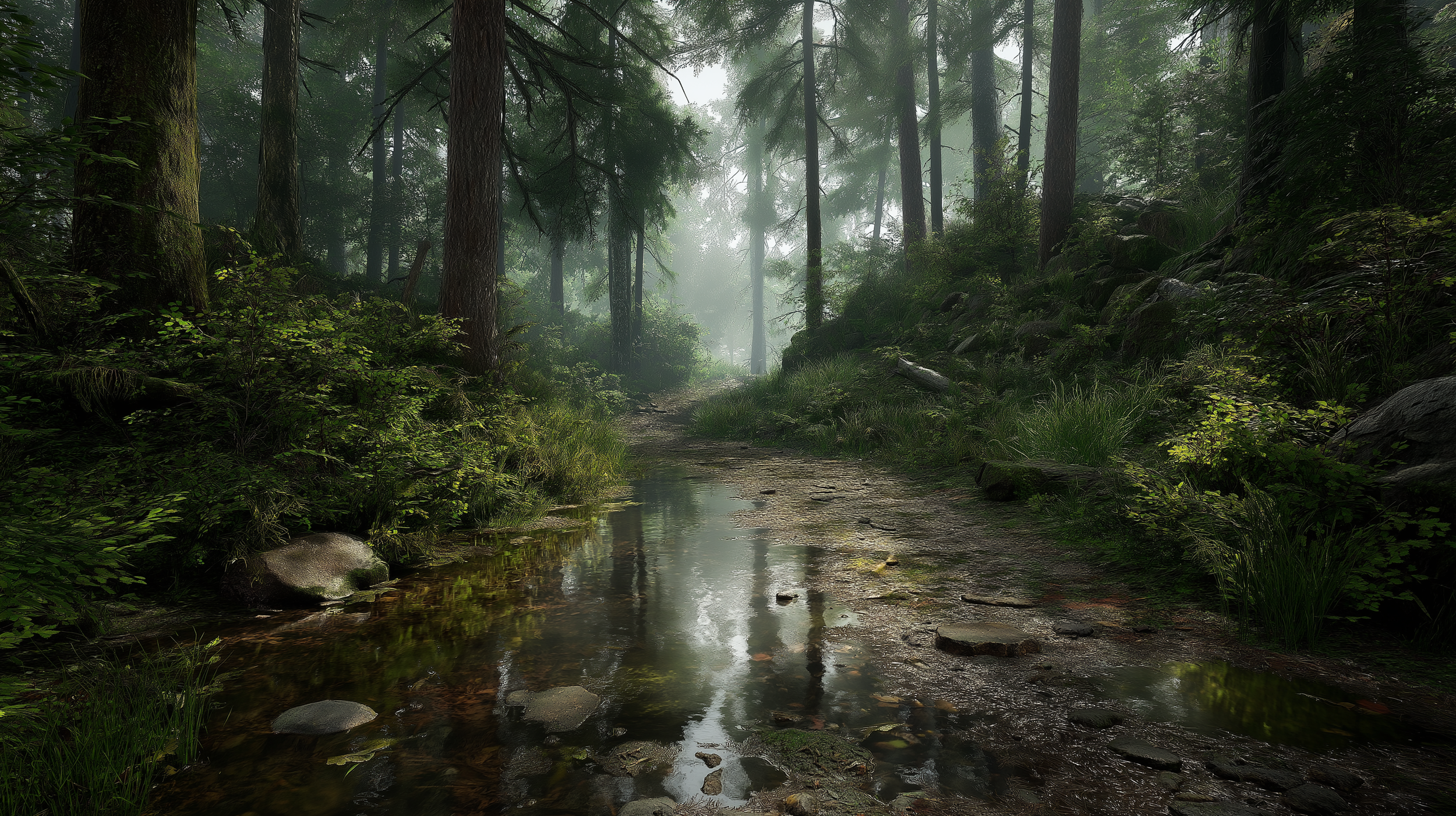
The rain has already passed through the forest, but it has not yet left it. What remains is a state of holding. Water rests where it landed, gathered into the seams and surfaces of things, darkening them, weighting them, asking nothing of the hours that follow. The forest is quieter now, though not in the sense of emptiness. It is quiet the way something becomes when it is full.
The path at the edge of the trees is altered, its familiar outline softened by mud and standing water. The ground yields slightly as you step onto it, not enough to slow you, but enough to register. Each footfall presses into the surface and stays there, the earth slow to forget the shape of what has passed over it. The air is cool and dense, carrying the scent of wet bark, iron-rich soil, and leaves beginning to break down under their own weight. Breathing feels different here, less like drawing something in and more like moving within something already present.
Above you, water releases itself from the canopy in no particular order. Drops fall from the tips of leaves, from needles, from the undersides of branches, striking stone, wood, and earth before disappearing again. There is no rhythm to follow, no pattern that settles into predictability. Sound arrives and leaves without building toward anything, absorbed quickly by the softened ground and the thickened air.
Deeper in, the forest shows the marks of saturation everywhere. Moss glows with a darker intensity, its surface swollen and luminous. Leaves cling together in heavy clusters, their edges blurred, their colors deepened beyond what they held before the rain. The trunks of trees appear sealed and slick, reflecting small fragments of light that slide across them and vanish. Everything looks slightly enlarged, as if the forest has taken on more substance, more weight than usual, and is adjusting slowly to the change.
Water continues its quiet movement through the landscape. It travels downward along grooves in bark and between roots, collecting in shallow depressions where it pauses without decision. Small pools form and remain, mirrors clouded by sediment and shadow. The forest does not rush to drain itself. It absorbs, redistributes, and waits. Time feels stretched here, not suspended, but unconcerned with pace.
As you move, the ground asks for attention. The softened soil gives beneath your steps, requiring small adjustments in balance. Fallen branches press more firmly into the earth, their outlines softened by moisture. Nothing here resists your presence, but nothing responds to it either. The forest is engaged in its own processes, continuing work that began before you arrived and will continue long after you leave.
Somewhere beyond sight, a branch shifts and settles, releasing water it no longer holds. The sound is brief and unremarkable, one of many small changes happening without audience or meaning. Light filters through the canopy in muted fragments, never fully gathering, never staying in one place long enough to claim it. There are no clear edges, no bright clearings that suggest arrival. Only gradual variation, one condition easing into the next.
As you pass through, the impressions you leave are minimal and temporary. Footprints soften at their edges. Disturbed water grows still again. The forest registers these changes briefly, then returns its attention inward, to soil compacting, leaves separating, water continuing its slow descent through layers of earth and root.
By the time the path widens and the ground firms again, the forest behind you has already begun to settle into what follows rain. Not a return to what it was, but a quiet movement toward whatever comes next. Moisture held, weight redistributed, surfaces darkened and slowly drying in their own time.
The rain has moved on.
The forest remains, altered and patient, still in the middle of becoming.